
Guide
How to identify and remove pool stains
Updated October 5, 2026
Written by Richard Ellis, Certified Pool Operator
Short answer
The color tells you most of it. Brown or green shapes under leaves are organic and fade with chlorine. Rust brown or orange is iron. Blue green or teal is copper. Yellow film on shady walls is usually mustard algae, and raised black spots are usually black algae. A vitamin C tablet held on the stain tells metal from everything else.
Treating a stain before you know what it is wastes money and can make it worse. Shock sets a metal stain harder, and stain remover does nothing for algae. Thirty seconds with the right test saves you both. Here is what each color usually means and how to check.
| Stain color | Most likely cause | Quick test |
|---|---|---|
| Brown or green leaf shapes | Leaves and debris | Fades with chlorine |
| Rust brown or orange | Iron, often well water | Lightens with vitamin C |
| Blue green or teal | Copper | Lightens with vitamin C |
| Purple or violet | Copper with high stabilizer | Lightens with vitamin C |
| Yellow film on shady walls | Mustard algae | Brushes off, comes back |
| Raised black spots | Black algae | Rough, comes back after brushing |
How do I identify a pool stain?
Look at the color, look at where it is, then test it. Two tests cover almost everything:
- Vitamin C test. Hold a crushed vitamin C tablet against the stain for 30 seconds. If it lightens, it is metal: iron, copper or manganese.
- Chlorine test. If vitamin C does nothing, brush the spot and dose a little chlorine near it. If it fades, it is organic or algae.
A stain that ignores both is often in the plaster itself, which is where an acid wash comes in.
What causes brown stains in a pool?
Leaves or iron. Leaf stains are brown or tea colored, often in the outline of the leaf, and sit where debris settled on the floor. They fade with chlorine and brushing. Iron stains are rust brown or orange, often spread across a wall or near where the fill water comes in, and they react to vitamin C, not chlorine.
Iron is very common on well water here. See how to remove well water stains.
What causes yellow stains on pool walls?
Usually mustard algae, especially if it is a yellow film on the shady side of the pool that brushes off like dust and comes back in the same spot. In spring, yellow pollen floating on the surface and collecting at the waterline gets mistaken for it. Yellow brown can also be iron.
How to tell pollen from algae, and how to get rid of it, is in how to get rid of mustard algae.
What causes black stains or spots in a pool?
Raised black or blue black spots that feel rough and come back after brushing are almost always black algae, and they love grout lines and rough plaster. Flat dark stains that react to vitamin C are metal, often manganese, which some well water carries. Dark lines in plaster cracks are often just dirt packed into the crack.
Black algae has its own guide: how to get rid of black algae.
What causes blue or green stains on pool plaster?
Copper. Blue green, teal and turquoise patches that ignore chlorine but lighten with vitamin C are copper, usually from a corroding heater, copper algaecide or an ionizer. Purple or violet stains usually point to copper too, in pools carrying a lot of stabilizer. See how to remove copper stains.
What causes stains on the bottom of the pool?
Mostly things that sat there. Leaves and acorns leave brown outlines. A bobby pin, nail or coin leaves a small rust spot. Granular shock or calcium poured straight onto the floor instead of dissolved first can bleach or mark the plaster. Metal that comes out of solution also tends to settle near the main drain.
Keeping the floor vacuumed and the debris out is half the battle, and it is a big part of every weekly pool service visit.
How do you remove metal stains from a pool?
With ascorbic acid while the pool stays full, then a metal sequestrant to hold the metal in the water so it does not settle back onto the plaster. Iron and copper both respond to it. Copper has its own step by step in how to remove copper stains, and iron from a well is in how to remove iron and well water stains. Metal that has set deep into old plaster needs an acid wash instead.
Can you remove pool stains without draining?
Most of them, yes. Organic stains fade with chlorine and brushing. Metal stains lift with ascorbic acid while the pool is full. Draining is for stains set deep in the plaster or plaster that is worn out, and acid wash or resurface explains how to tell which one you have.
Whatever you treat with, keep pH and chlorine in the CDC ranges afterward so the stain has nothing to come back on.
Staining that came off in one visit
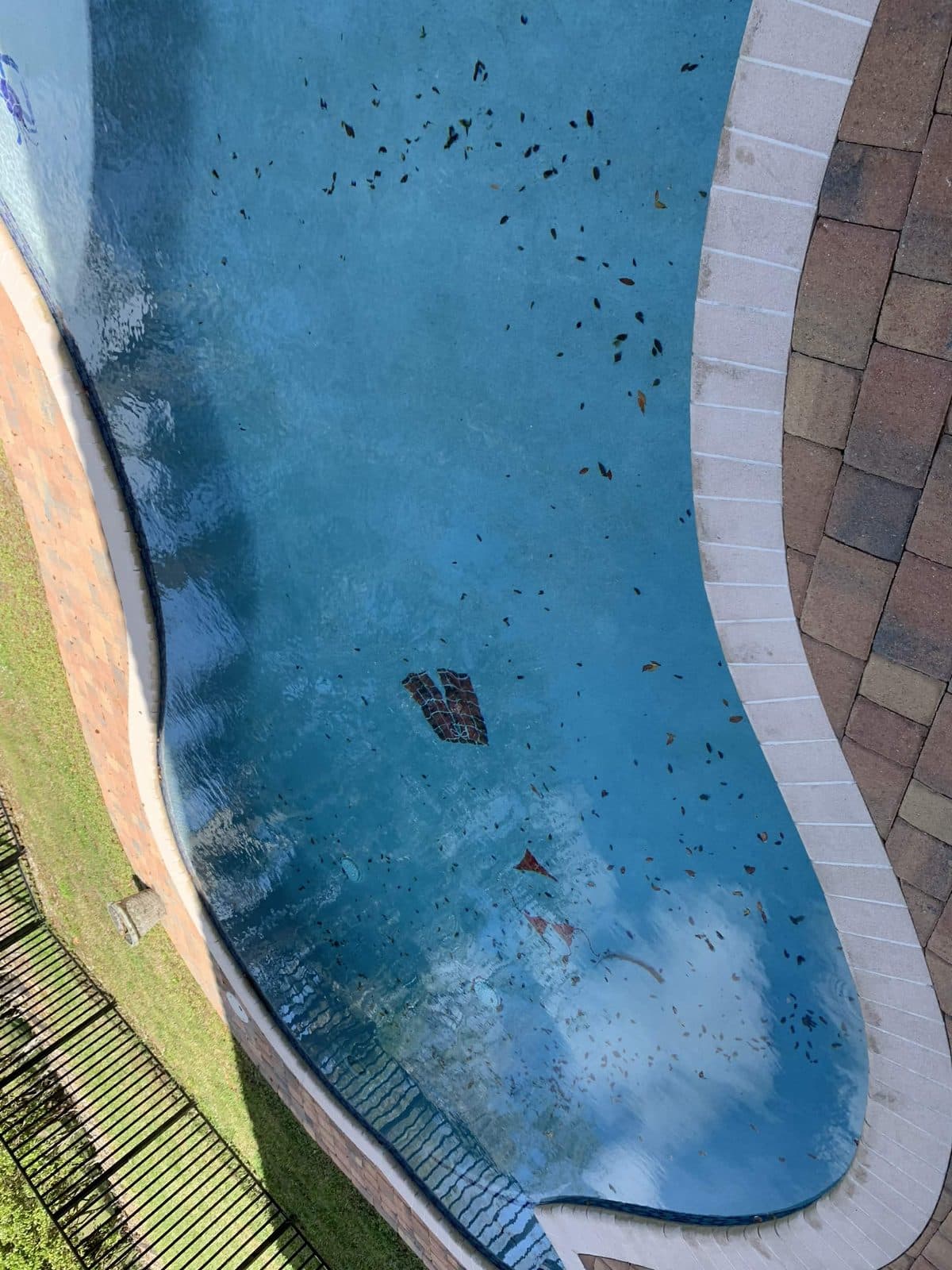 Before
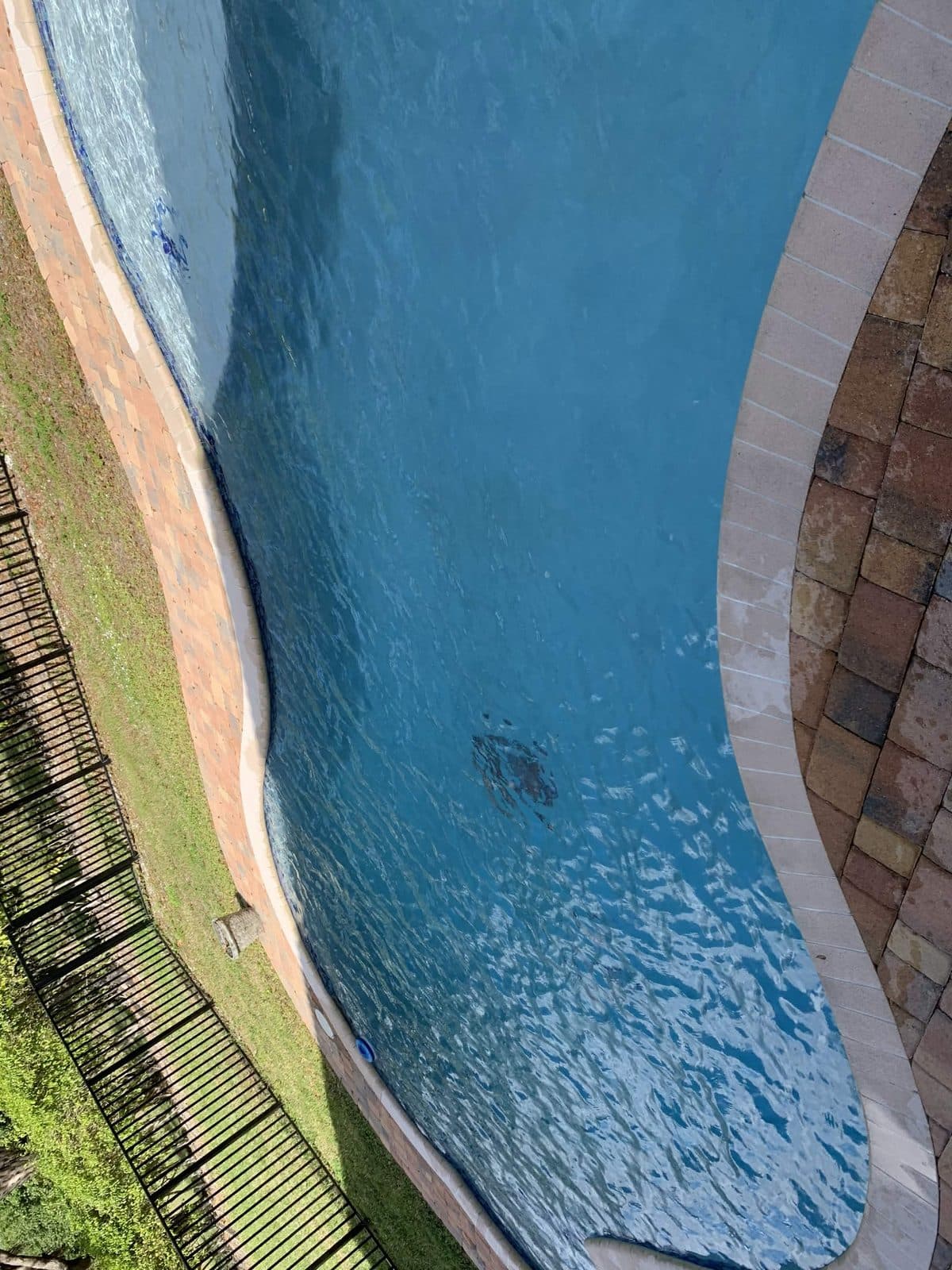 After
Debris and staining across the whole surface. Gone in one visit.
Quick answers
- Do pool stains go away on their own?
- Organic stains sometimes fade with steady chlorine. Metal stains almost never do, and they tend to get darker each time the pool is shocked.
- Can I use the vitamin C test on any pool?
- Yes, on plaster, pebble, vinyl and fiberglass. It only tells you whether a stain is metal. It does not harm the surface.
- Why does my pool stain after rain?
- Rain washes leaves, pollen and dirt in and drops the chlorine, so organic stains form where the debris settles. Net it out quickly and keep chlorine up after storms.
Sources
Keep reading
How to remove copper stains from a pool
Copper stains are blue green, teal or gray on plaster, and they come from copper in the water: an old hea...
How to remove iron and well water stains from a pool
Metal stains from well water are usually iron, which leaves brown or rust colored marks, or copper, which...
How to get rid of black algae in a pool
Black algae roots into the pores of plaster and grows under a protective outer layer, so shock alone will...
How to get rid of mustard algae in a pool
Mustard algae is a yellow or yellow green film that clings to shady walls and brushes off easily, then co...
Want a straight number for your pool?
Free estimate, no pressure, chemicals always included in the monthly price.
Serving Wellington, Royal Palm Beach, Greenacres, Lake Worth and nearby