
Guide
How to remove copper stains from a pool
Updated October 2, 2026
Written by Richard Ellis, Certified Pool Operator
Short answer
Copper stains are blue green, teal or gray on plaster, and they come from copper in the water: an old heater eaten by low pH, a copper algaecide or an ionizer. Confirm it with a vitamin C test, lift it with ascorbic acid with the pool full, then add a metal sequestrant so it does not come back.
Copper stains look like algae that will not brush off, and that is usually how people find out they have them: they brush, they shock, and the stain is still there, sometimes worse. Copper is a metal problem, not an algae problem, so the fix is different. Here is how to tell for sure, how to get it off the plaster, and how to stop the copper getting back in.
What causes copper stains in a pool?
Copper dissolved in the water, which almost always comes from inside the pool system rather than from the hose. The usual sources:
- The heater. Many heat exchangers are copper. Water with the pH running low slowly eats at them, and the copper ends up on the plaster.
- Copper algaecides. Used once in a while they are fine. Used every week, the copper builds up.
- Ionizers and mineral systems that add copper on purpose.
- Low pH in general. Acidic water pulls metal out of anything it touches.
Well water in Palm Beach County brings iron far more often than copper. If your stain is rust brown rather than blue green, see how to remove well water stains.
What do copper stains look like?
Blue green, teal, turquoise or gray patches on the plaster, often near the return jets, on the steps or across the floor. In pools with a lot of stabilizer, copper can also show up purple or violet. Copper in the water can tint blonde hair green before it ever stains a wall.
The water itself is a clue too. A pool that turns clear green right after a shock, rather than cloudy green, usually has metal in it. More on that in why is my pool green.
How do I know if a stain is copper or algae?
Do the vitamin C test. Crush a vitamin C tablet, put it in a sock or hold it right against the stain for about 30 seconds, then look. If the spot underneath went lighter, the stain is metal. Algae and leaf stains do not react to vitamin C, but they do fade with chlorine and brushing.
The stain color guide has the other colors and what each one usually means.
How do I remove copper stains from pool plaster?
Lift them with ascorbic acid, which is vitamin C in bulk, with the pool full. The short version: lower the chlorine, lower the pH, add ascorbic acid with the pump running, brush, then lock the copper up with a sequestrant before the chlorine goes back up. The numbered steps are below.
Read the label on the product you buy, because the doses differ between brands. And add one chemical at a time. The CDC is clear that pool chemicals should never be mixed with each other.
Can you remove copper stains without draining the pool?
Yes. Most copper stains come off with ascorbic acid while the pool is full, and that is where to start. Draining only makes sense when the stain has set deep into old plaster, or the plaster is worn out anyway. Draining a Florida pool has its own risks, covered in should I drain my pool.
Will an acid wash remove copper stains?
Usually, because an acid wash takes off a thin layer of plaster and the stain goes with it. But it is the last resort, not the first. Try ascorbic acid first, and find the copper source before any wash, or the copper still in the water just stains the fresh surface.
If you get to that point, our acid wash is a drain, wash and refill, and acid wash or resurface explains whether your plaster has a wash left in it.
How do I keep copper stains from coming back?
Keep the pH from running low, stop adding copper, and keep a sequestrant in the water.
- Hold the pH in range. The CDC range is 7.0 to 7.8. A pool that sits below that is dissolving its own heater.
- Switch away from copper algaecides if you use them every week.
- Add a metal sequestrant after the treatment and top it up on the schedule on the bottle.
- Test regularly. Low pH does its damage quietly. That is part of why a weekly pool service tests and balances the water every visit.
What an acid wash looks like
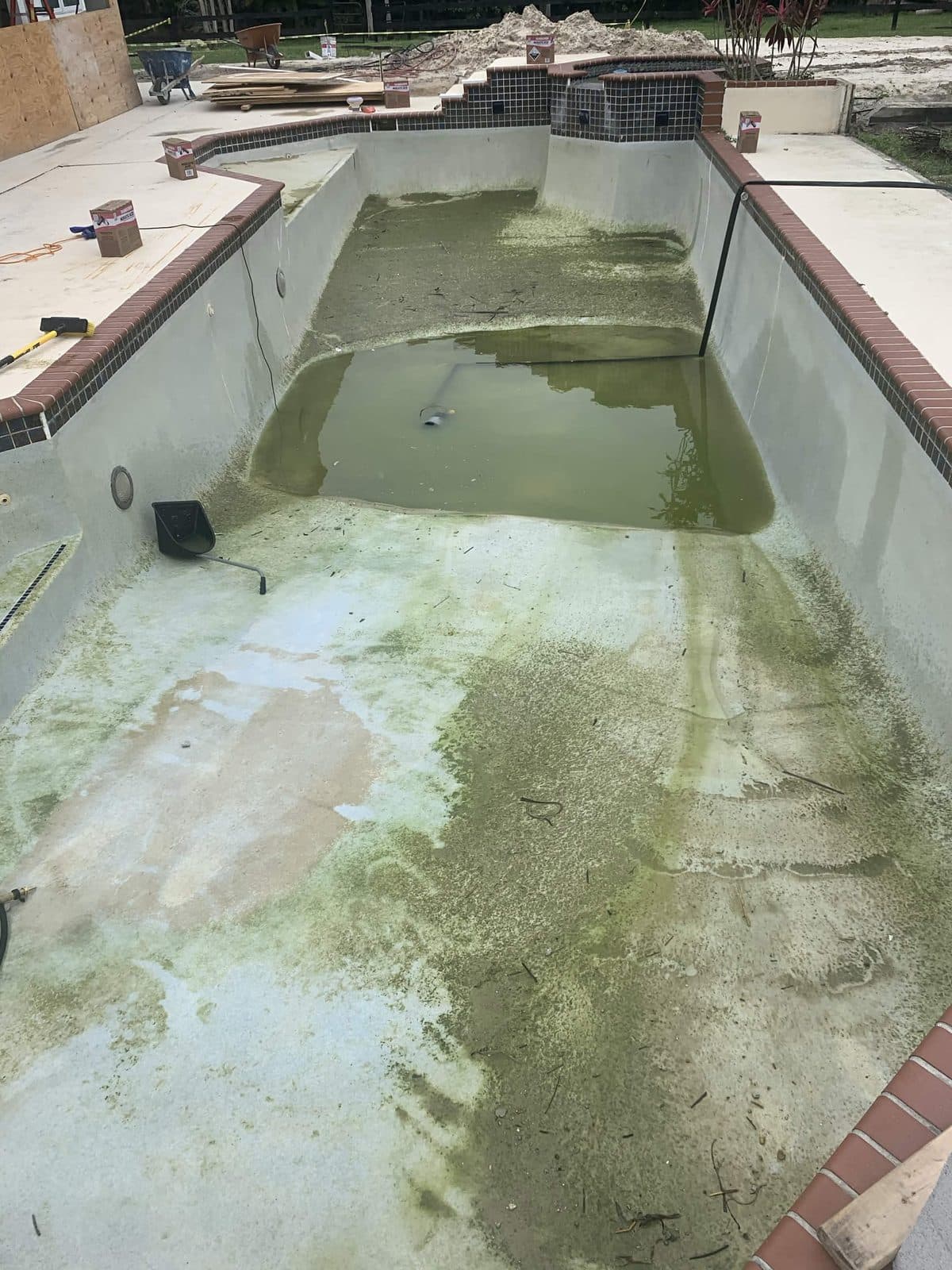 1
Drained, and it was everywhere 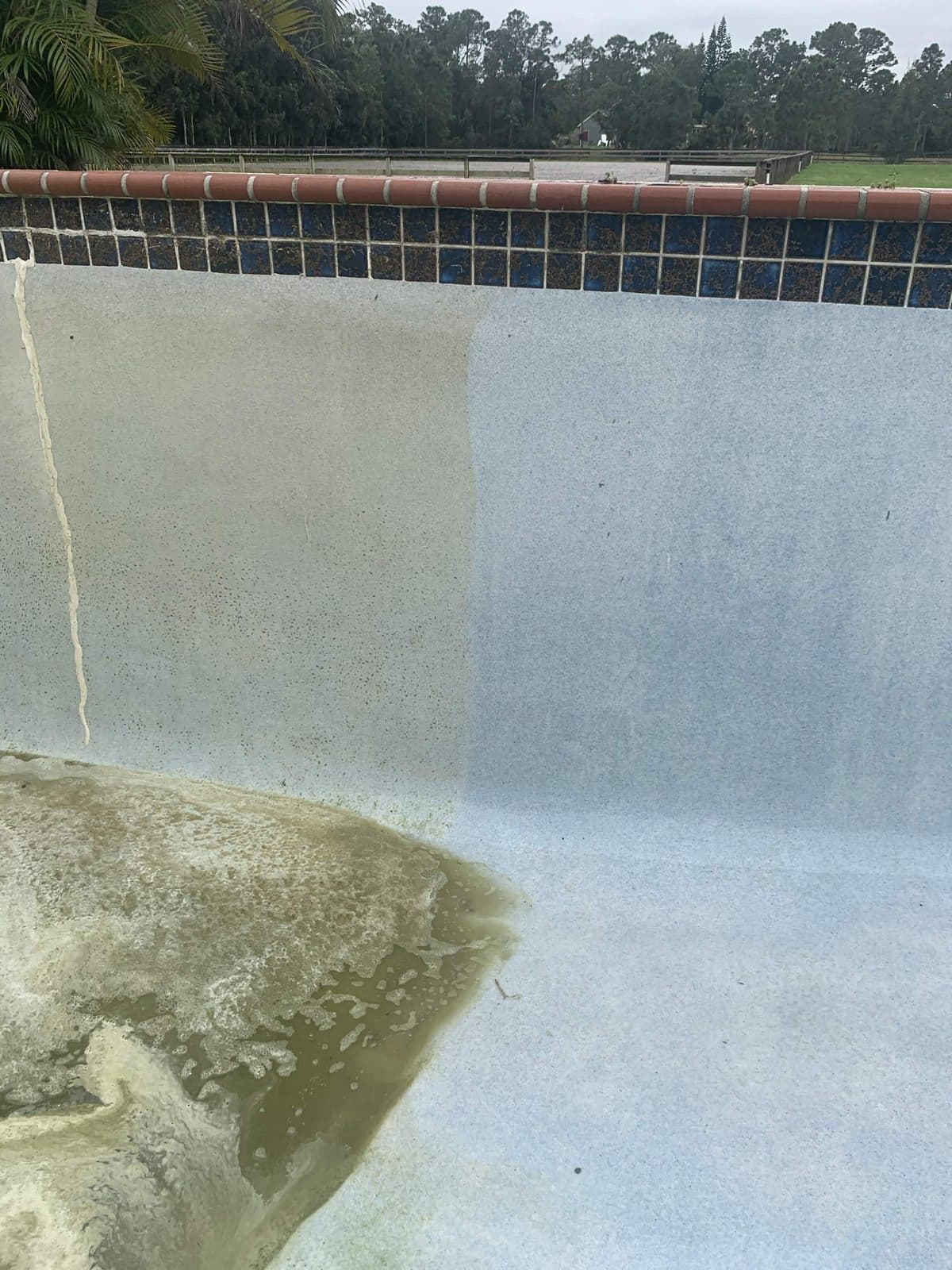 2
First panel stripped clean 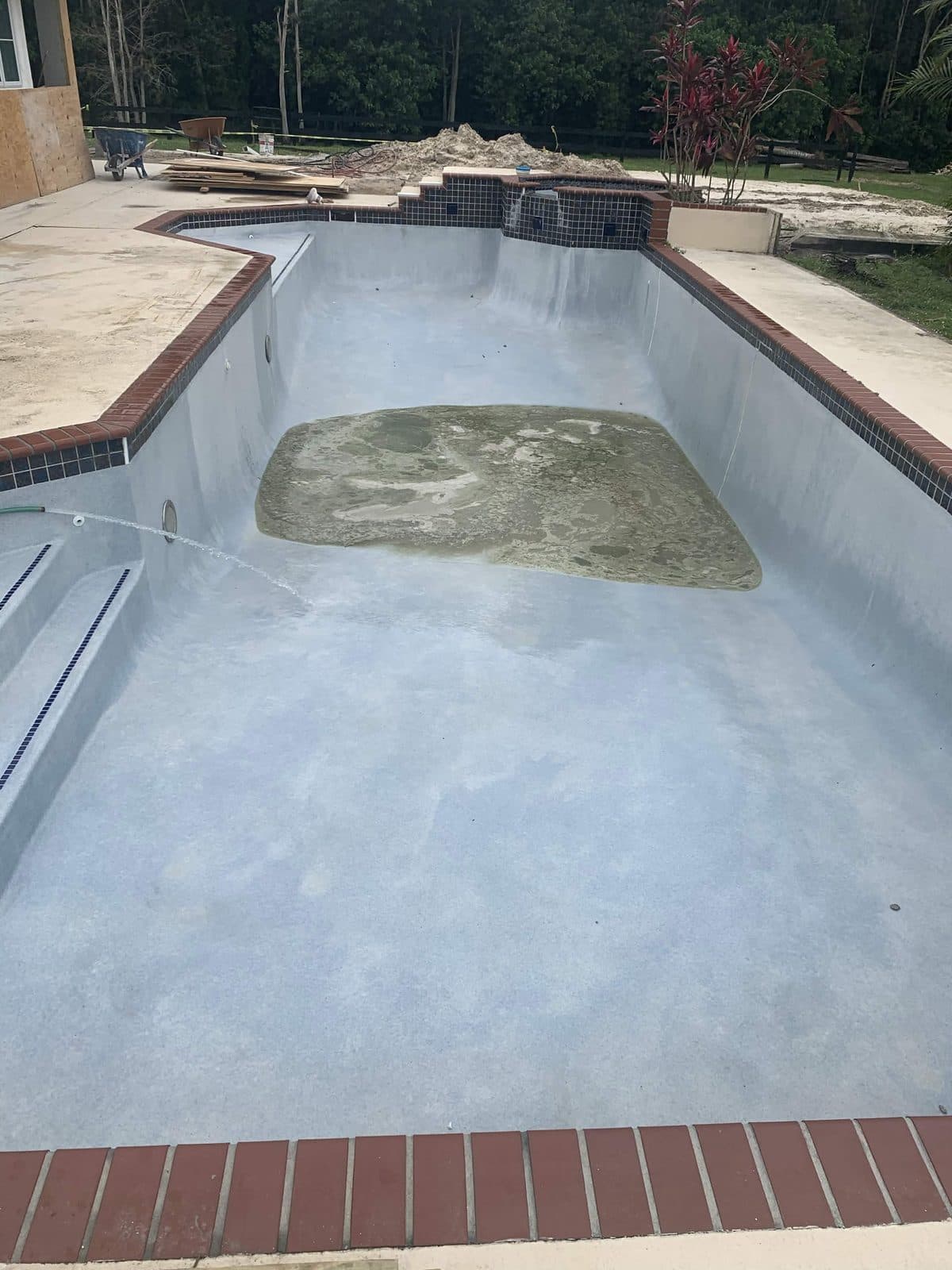 3
Clean plaster, ready to fill
How to lift copper stains with ascorbic acid
- 1
Confirm it is metal
Hold a crushed vitamin C tablet against the stain for 30 seconds. If it lightens, it is metal and this method will work.
- 2
Let the chlorine drop
Ascorbic acid burns off chlorine and chlorine fights the treatment, so most products ask for chlorine near zero first. Stop adding chlorine and let it fall.
- 3
Lower the pH
Bring the pH down to the level on the product label, usually around 7.2 or a little lower.
- 4
Add the ascorbic acid
With the pump running, spread the dose across the pool, extra over the worst stains. Brush the stained areas.
- 5
Add the sequestrant
Once the stains have lifted, add a metal sequestrant so the copper stays in the water instead of going back on the walls.
- 6
Bring the water back slowly
Raise the chlorine back up gradually over a day or two and rebalance the pH. A big shock right away can bring the stain straight back.
Quick answers
- Does vitamin C remove pool stains?
- It removes metal stains like copper and iron. It does nothing for algae or leaf stains, which fade with chlorine and brushing instead.
- Can copper in pool water turn hair green?
- Yes. Copper in the water, not the chlorine, is what turns blonde hair green. It is often the first sign of copper before the plaster stains.
- Why did the copper stain come back?
- Because the copper is still in the water or still getting in. Add a sequestrant, raise chlorine slowly after treatment, and find the source, usually low pH or a copper algaecide.
Sources
Keep reading
How to identify and remove pool stains
The color tells you most of it. Brown or green shapes under leaves are organic and fade with chlorine. Ru...
How to remove iron and well water stains from a pool
Metal stains from well water are usually iron, which leaves brown or rust colored marks, or copper, which...
Acid wash or resurface? A plain English guide
Acid wash stained plaster that still feels smooth, and resurface plaster that feels chalky, rough or flak...
Why is my pool green?
A pool turns green when algae grows faster than the chlorine can kill it. In Florida the usual triggers a...
Want a straight number for your pool?
Free estimate, no pressure, chemicals always included in the monthly price.
Serving Wellington, Royal Palm Beach, Greenacres, Lake Worth and nearby